
A God-Shaped Horizon
Not everyone is searching for God, but some of us cannot stop walking toward the edge.

In a recent piece in Small Potatoes, Paul Bloom challenges the idea of Blaise Pascal’s “God-shaped hole”—the notion that all humans possess an innate longing for God. Bloom argues that many people live fully secular lives without any such yearning, and that meaning and satisfaction can arise from many non-spiritual sources. I think he is largely right. Human beings are not uniform. Some people report feeling no pull toward transcendence at all. Who am I to tell them they should feel otherwise?
I want to offer my own life as a complementary data point—not in opposition to Bloom’s argument, but as further evidence of the diversity of human experience.
I was not raised in a religious household. My mother would tell you she is Christian, but there was no praying, no practicing, and almost no church. I remember attending exactly once when I was four or five years old. Mostly, I grew up watching television. Alongside the action heroes, the figures who quietly shaped my moral imagination included characters like Wilson from *Tool Time*, Kermit the Frog, and Papa Smurf—fictional sages who modelled patience, humour, steadiness, and care for others.
My first conscious brush with what I would later call the sacred came when I was six. I found a dead bird on the road and remember thinking that God would be sad. I went home, grabbed a shovel, returned, and buried the bird. There was no doctrine behind it. It simply felt like the kind thing to do.
At eleven, a friend invited me to a Mennonite Brethren church. The Senior Pastor was an incredibly gifted story teller named Cliff Janzen. I loved listening to him teach and was always disappointed when we kids were dismissed to our own curriculum. I wanted to stay with the adults. I wanted the deeper story. I kept going back for more.
Eventually I became deeply involved in a branch of Pentecostal Christianity—pious, devout, and certain that devotion would be met with fulfillment. Life did not unfold that way. My years of faith resembled the first half of the Book of Job more than the second. So far, there’s been no just reprieve from my calamities.
Today, having counted fifty laps around the sun, I live in poverty, largely disconnected from the church communities that once defined my life, and without the satisfactions that faith traditions often promise their most committed adherents.
And yet I continue to search.
Even if there is no universal God-shaped hole, some of us unmistakably live with a persistent orientation toward transcendence.
I call my position Devout Agnosticism. What began as a humorous escape hatch has gradually become something more serious—the calibrator of my truth grid. Too much certainty in either direction feels wrong.
Absolute dismissal of the transcendent feels incomplete; absolute confidence in any theological system requires a measure of willful ignorance.
Somewhere in between lies a posture that remains open, disciplined, and searching. I have come, in my own way, to “love the Lord my God with half my soul, half my mind, and half my strength” ( Deuteronomy 6:5 ) / 2.
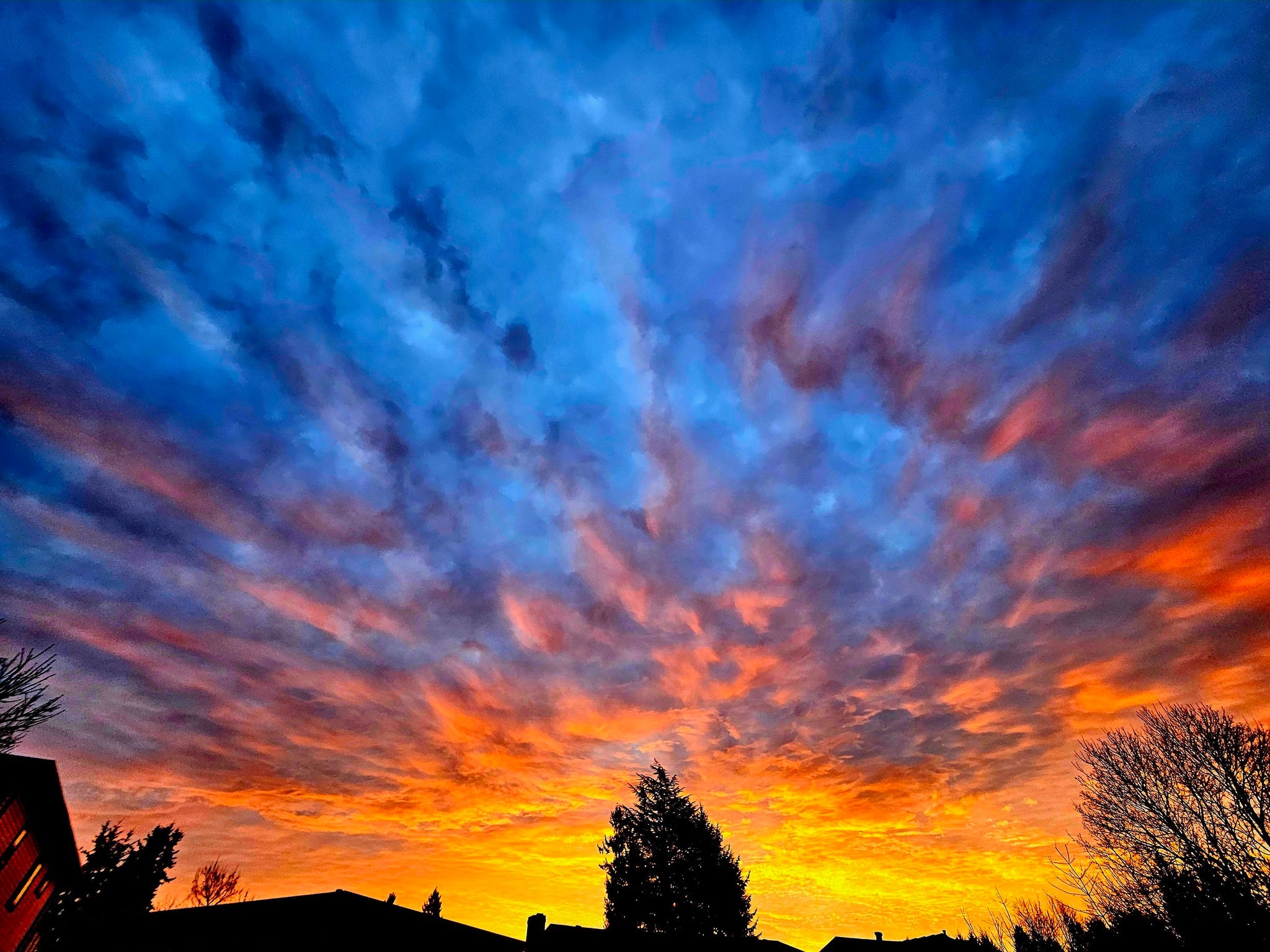
For me, the divine does not feel like a missing piece that must be inserted to make life whole. It feels more like a relentless pull toward a deeper understanding of myself and the cosmos I find myself in. It stretches out like a horizon that cannot be reached once and for all, yet continues to orient the direction of travel. Even when religious promises fail, even when institutions disappoint, even when belief becomes uncertain and spiritual experiences fade into memory, the horizon remains.
Perhaps there is no universal God-shaped hole. But for some of us, there certainly remains a God-shaped horizon—and Devout Agnosticism is my way of walking toward it without pretending that I already know what waits there.